Gendered Persons
Mar 24, 2026
Think about your childhood…
Do you remember the first time you were aware of your gender?
Do you recall your first memories of perceiving yourself or others around you as female or male (or any different than these)?
so far…
Definitions
Minimal
“Working”
Frameworks
Individual
Interaction
Institutional
frameworks
within the individual framework
- gendered person
- sex v gender
- gender as behavior
- gender as process
- gender socialization
the gendered person
Individualist perspective: Gender is “something” that individuals possess as a part of themselves and that accompanies them as they move through life.
“Something”:
in terms of “masculinity” and/or “femininity”
in terms of more particular qualities / characteristics
Studied mainly from Psychology and Sociology, the individualist perspective is the most widely shared of the three frameworks
why?
- One of the main debates: sex v gender
sex v gender
Debate just over a “term”? What is at stake?
far from an agreement over its appropriate use:
society perceive stable, permanent and clear differences between women and men
for most people in our society sex & gender are the same thing
This idea that sex marks a distinction between two physically and genetically discrete categories of people is called sexual dimorphism
- these differences could be seen as biological (“structurally distinguishable”) or social (Breedlove, 1994; Wharton, 2005) >> core of the debate
Sexual dimorphism: claim that sex divides completely & clearly different groups
This distinction usually relies on “biological features” (genitalia, sex chromosomes, reproductive system…)
the commonly accepted link between gender & genitals has been studied as a set of beliefs that creates a “‘natural[ized]’ attitude towards gender”
- most common beliefs:
- there are two and only two genders;
- gender is invariant;
- genitals are the essential signs of gender;
- the male/female dichotomy is natural;
- being masculine or feminine is not a matter of choice;
- all individuals can (and must) be classified as masculine or feminine” (Hawkesworth, 1997)
- most common beliefs:
Is this true?
biological shared features (same number of legs, arms, eyes…)
not shared features (chromosomal differences, external and internal sexual structures, hormonal production)
more importantly… is this “biological difference” clear?
sex v gender



around 2% of population cannot be easily categorized: sex chromosomes, external genitalia, and/or the internal reproductive system do not fit the standard for males or females >> intersexed individuals
By raising the possibility that genitals are not definitive evidence of one’s maleness or femaleness, intersexuals are challenging “the natural[ized] attitude.”
intersex persons have helped to reveal that there are social processes that shape assignment to and/or construction of a sex category (i.e.: surgery)
sex v gender
The process through which social meanings are attached to biological sex is called sex assignment / sex category
it is guided, at least in part, by socially agreed upon criteria for identifying sex, such as external genitalia.
it is the process –occurring at birth or even prenatally– by which people are identified as male or female (their sex category).
what is the lesson then?
there is a social process behind sex assignment or sex categorization, and there is an interaction between biology and environment
but again: Is it sex the biological and genetic substrate from which gender distinctions emerge, or do gender distinctions lead us to perceive two, easily distinguishable sexes?
to what extent?
sex v gender
2 positions:
- All social:
first we have social understandings of what men and women are, or should be, and then we perceive sex differences (Kessler and McKenna, 1978).
“Biological, psychological, and social differences do not lead to our seeing two genders. Our seeing of two genders leads to the ‘discovery’ of biological, psychological, and social differences” (1978: 163).
people rely on other “markers” to assign a sex category
- markers of sex category depend heavily on cultural circumstances and thus vary widely across time, place, and social group (i.e.: hair)
- regardless of what criteria are invoked to assign sex category, there is none that works in every circumstance to distinguish males from females.
- Biology sets the limits to social influences: “Biosocial or epigenetic perspective”
treat sex as objectively, identifiable “real” distinctions between males and females that are rooted in human physiology, anatomy, and genetics.
These distinctions become the raw material from which gender is constructed.
this view would not necessarily deny that assignment to sex categories reflects socially agreed-upon rules… but there is a clear distinction between sex and gender, arguing that sex limits the construction of gender.
sex v gender
What are the implications?
From social perspective:
If there is no definitive “objective” feature that distinguishes human beings… then sex can not be conceived without gender.
Gender is the basis for distinctions based on sex. Differences exist indeed, but they are social-constructions.
What is the goal then?
- to explain the “belief” on a two-naturally-gendered world.
- how sex distinctions take this self-evident quality?
- why the belief in these distinctions is so resistant to change?
Social explanation for an individual feature
sex v gender
What are the implications?
From ‘Biosocial/epigenetic’ perspective:
Sex as identifiable distinction between males and females
Rooted in human physiology, anatomy, and genetics.
raw material from which gender is constructed… they don’t deny that sex categories are social agreements…
one of the goals is to identify biological, genetic, or evolutionary contributions to male and female behaviors and characteristics
gendered person
from both >> Persons are gendered (socially and/or biologically)
Gender as an attribute of individuals. Relatively stable across situations
From this perspective, less attention to other social categories (race, class, ethnicity, etc.)
assumption: implicit belief that average differences between women and men as groups are greater than the differences within each sex category.
question of “Becoming gendered”
How is it that people take on characteristics seen as socially appropriate for their gender?
two approaches:
- Behavior (How is it expressed)
- Process (How is it produced)
gender as behavior
It was there before the term “gender” came out. Tradition of study of “sex differences” from sociology and psychology (e.g.: “The Psychology of Sex Differences” Maccoby and Jacklin, 1974)
study of gender as a “set of traits”
What kind of questions?
Study of intellectual capabilities: verbal and math skills; social behaviors: aggressiveness.
Are women more empathetic than men? Do men tend to take more risks than women?
Results: differences between women and men were fewer and of less magnitude than many had assumed.
What was the goal?
- challenging negative cultural stereotypes about women through empirical research
Study of differences.
Task: how to tell if the differences are meaningful, significant, important?
evaluate magnitude (size of those differences)
evaluate stability (consistency of those differences)
In any case, if sex differences are found, they represent average differences between the sexes, not categorical distinctions.
gender as behavior
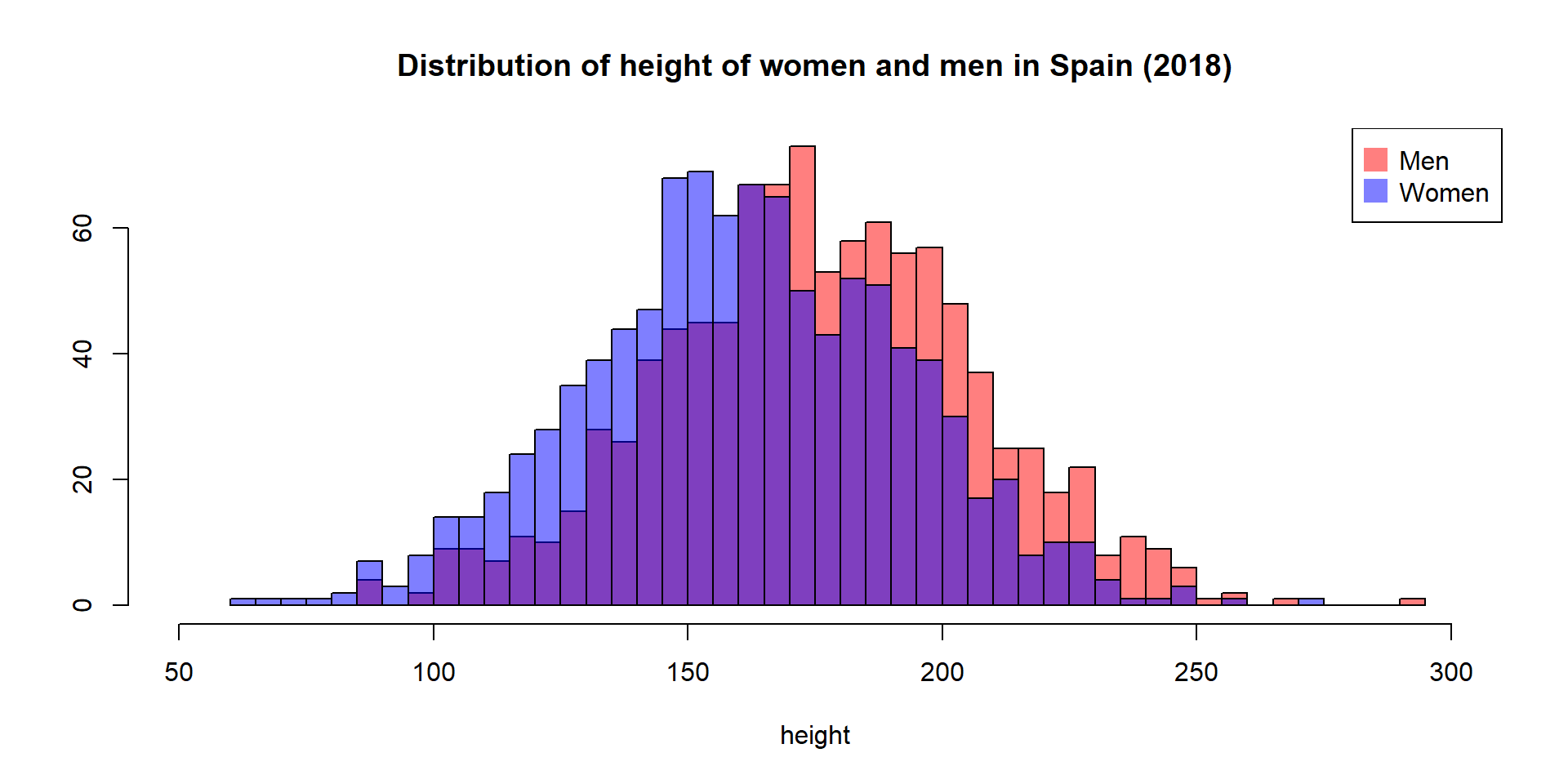
Magnitude
How important should be the difference to clearly state gender differentiation?
size matters: degree of overlap in the scores (85%, 65%, 55%)
Is it important to assess the difference?
poor measurement leads to 2 types of Bias:
tendency to exaggerate differences (“opposite sex”) > “alpha bias”
tendency to minimize differences (“differences are trivial”) > “beta bias”
gender as behavior
Stability
- differences should stand across different samples (age, race, ethnicity, time, social class, etc.)
- improved since 70s >> statistical software and meta-analysis (comparison of data from different studies).
- to identify the reasons results vary, disentangling those related to sex difference from those related to other factors
Is it important to assess consistency?
- Tell if a particular trait or behavioral disposition is linked with a particular sex, rather than with another social category, setting, or time period.
- Also, fuel new debates about the existence and persistence of sex differences.
gender as behavior
Why is the study of those differences important?
Underlying these debates are broader issues of gender inequality.
If research showed that the two groups were not really very different, according to this logic, it would be more difficult for societies to defend gender inequality.
Women in particular have been excluded from such domains as politics and employment on the basis of their differences from men.
gender as a process
How & when people become aware of gender?
2 approaches:
- Differences are “hard-wired” (rooted in biological development)
- Differences are a consequence of coping with social roles
a1) Epigenetic/biosocial: both genes and environment determine the structure and function of brain cells and thus the behavior of the organism
a2) Evolutionary psychology: males and females will be the same or similar in all those domains in which the sexes have faced the same or similar adaptive problems (Buss, 1995)
gender as a process
In which domains do women and men face different adaptive problems? (a2)
- sexual selection >> “the causal process of the evolution of characteristics on the basis of reproductive advantage, as opposed to survival advantage” (Buss, 1995)
- inter & intra sex competition specific for each sex >> unique challenges. the way each sex confronts these sex-specific challenges leads to sex differences in sexuality and mating
- sexual selection >> “the causal process of the evolution of characteristics on the basis of reproductive advantage, as opposed to survival advantage” (Buss, 1995)
Criticism
High amounts of variation among individuals and societies in those kinds of behavior (coping with different problems)
learning and experience
gender socialization
gender socialization Processes through which individuals take on gendered qualities and characteristics and acquire a sense of self.
through socialization people learn what their society expects of them as males or females.
Components:
- Target >> individual who encounters the social world through interactions with parents and caretakers.
- Agent >> the individuals, groups, and organizations who pass on cultural information.
gender socialization
How does it work?
3 Theories:
Social learning
Cognitive development
Identification theory