Gender Socialization
Mar 24, 2026
Gender Socialization
how do we “learn” how to be fememnine/masculine?
how do society’s messages about appropriate (gender) behaviors are transmitted?
Gender Socialization >> “Processes through which individuals take on gendered qualities and characteristics and acquire a sense of self.” (Warthon, 2005:35)
through socialization people learn what their society expects of them as males or females. >> people are held accountable for these behaviors (“appropriate”)
Components:
Target => individual who encounters the social world through interactions with parents and caretakers (newborn). Experience other people and themselves.
Agent => the individuals, groups, and organizations who pass on cultural information (parents).
Gender Socialization
How does it work?
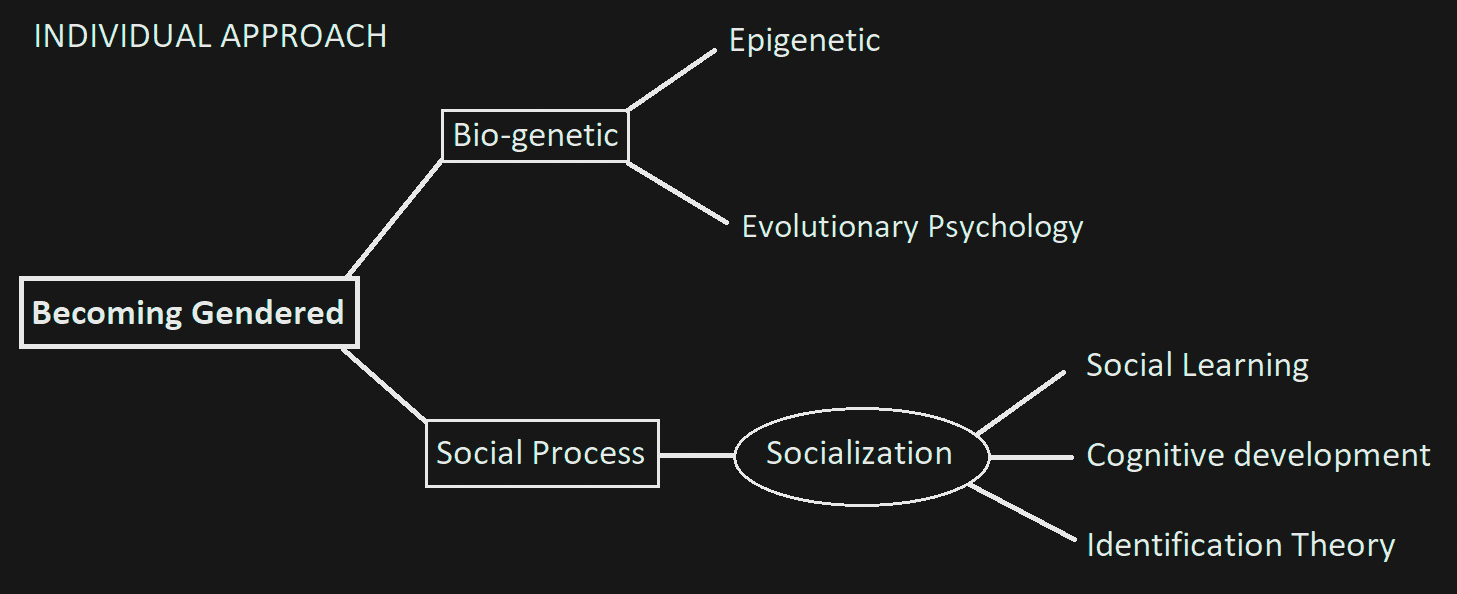
3 Major Theories:
Social learning (learning theory)
Cognitive development (learning and identity theory)
Identification theory (psychoanalysis)
Social learning
No need to be intentional from agents. Parents aren’t usually aware of their gender modeling actions.
also not intentional on target side: experience and observation of consequences of behavior nor
“boys don’t cry” >>
- future reactions to same situations
gender-typed behavior => different responses depending upon whether the person engaging in the behavior is female or male.
can you think other examples of social learning and gender-typed behavior?
Social learning
Criticism to Social Learning Theory:
“passive target” or “Lump of clay” perspective => modeled from the outside
research suggests that children are more actively involved in their own socialization than social learning theorists acknowledge
Cognitive development
How do people understand/perceive/experience their gender?
Study of how people internalize gender meanings from the outside world and then use those meanings to construct an identity consistent with them.
connection between “membership” to some sex category >> meanings attached to that membership >> guide individual behavior
More active role of individuals during gender socialization >> focus on the ways that children actively seek to understand themselves and their worlds
“inside out”> from the perspective of the child and his or her thought processes.
Cognitive development
Comes from a wider theory in psychology => Piaget’s principles of cognitive development, and others (Kohlberg, 1966; Bem, 1983/1993)
Becoming a gendered person is part of a more general psychological process of cognitive maturation.
Gender works as other important cognitive skills (most important?)
Cognitive development
Mechanism:
- once individuals are labeled themselves as gendered (e.g.: female or male)
- and recognize this as stable feature,
- they are motivated to seek out gender-appropriate behaviors.
- give greater value to gender-appropriate behaviors, which in turn reinforces positively this mechanism
With time (age), individual’s ability to interpret gender cues become more sophisticated and flexible (general cognitive development)
Cognitive development
Criticism to Cognitive Development Approach:
Gender only takes place after individuals are labeled
Why is it gender and no other person’s characteristic their most important cognitive organizing principle?
Cognitive development
New developments within cognitive approach: Gender Schema Theory
Not just a cognitive skill >> part of identities and personalities.
Through this process people acquire traits and personalities that are consistent with their understandings of themselves as male or female. >> “gendered personalities”
“it is also a way of looking at reality that produces and reproduces those traits during a lifetime of self-construction” (Bem, 1993: 154)
Social world provides “material” to construct gender identities which in turn guide perception and actions.
2 features of gender schemes (in American society):
Gender Polarization: belief that what is acceptable or appropriate for females is not acceptable or appropriate for males (and vice versa) and that anyone who deviates from these standards is unnatural or immoral (“oppposite sex”).
Androcentrism: belief that males and masculinity are superior to females and femininity, and that males and masculinity are the standard or the norm.
Individuals not only internalize that males and females are extremely different, but also the belief that maleness and masculinity are more desirable and highly valued.
“boys don’t cry”, “girls play with dolls”
From Bem’s perspective androcentrism damages both men and women:
“crossing the gender boundary has a more negative cultural meaning for men than it has for women – which means, in turn, that male gender-boundary-crossers are much more culturally stigmatized than female gender-boundary-crossers.” (Bem 1993: 149–50)
Cognitive development
Do these Gender Schemes exist?
Why do we use them? how?
Children (and adults) use gender (cognitive) schemes to make sense of the social world >> organize and process information from the environment.
Social Categorization is inherent to cognitive development and it is a feature performed by the individuals >> they are actives in the process of socialization
Becoming gendered it’s not only to learn what is expected as male/female >> become “gender schematic”
- activate gender schemes to organize, interpret and process social information.
Social Learning and Cognitive are not exclusive >> social learning theory attends more to the ways that parents and others respond to children, while cognitive theories focus on children efforts to make sense of the world around them.
Identification Theory
Concerned explicitly with gender identities and sexuality
Disagrees that gender-appropriate behavior is learned through reinforcement or imitation, or reflects an intent to behave in a particular way
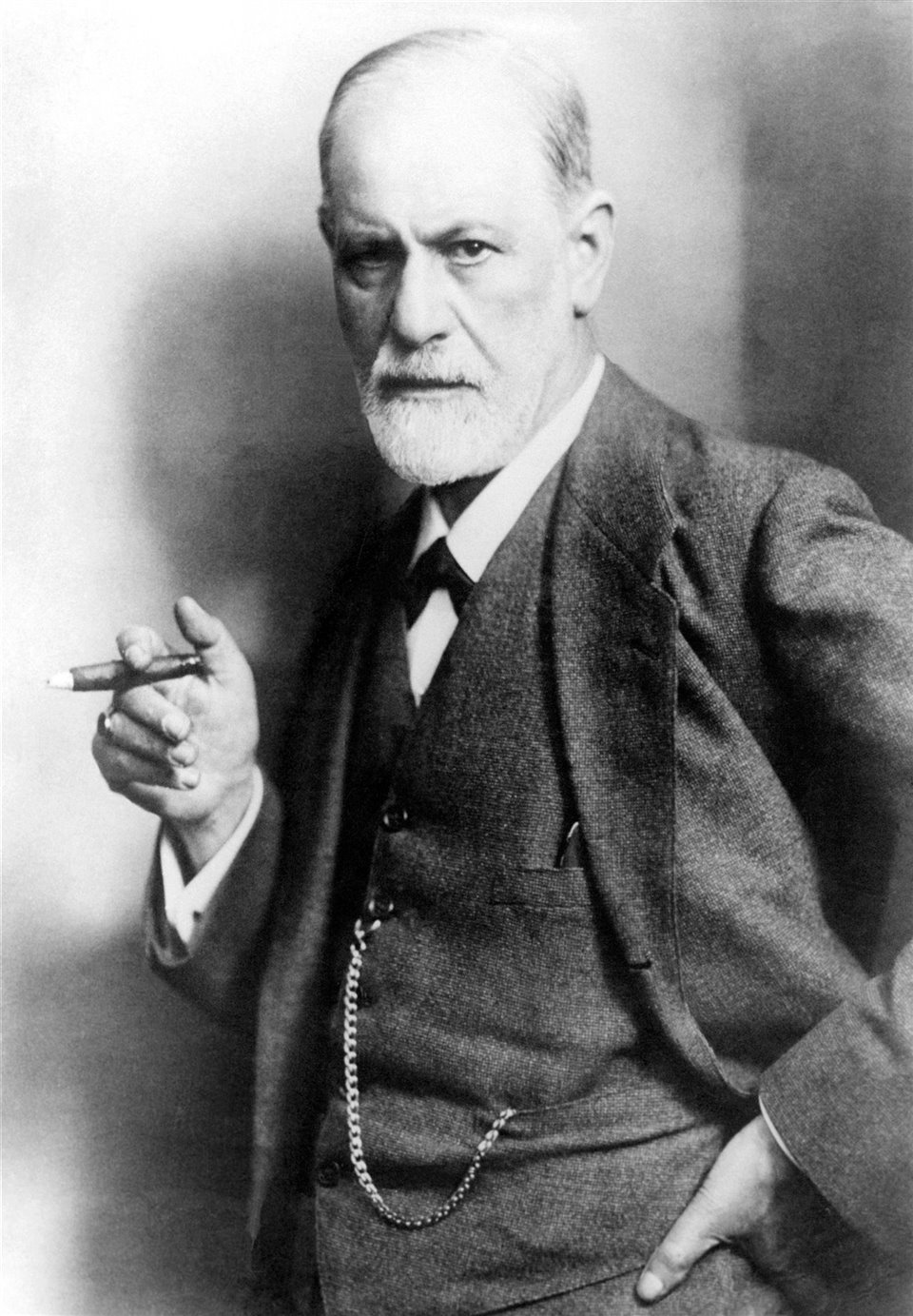
Comes from a different theory in psychology => Psychoanalysis (Freud)
- unconscious psychological processes >> gender (some aspects) one of them
Identification Theory
Gender identity is formed during early childhood as children develop emotional attachments to a same-sex parent or adult. (Chodorow, 1978)
Given extreme dependence for satisfaction of needs, the earliest emotional attachments belong to their mother
Infants’ relations with mothers are emotionally significant and deeply meaningful, feelings that may be incorporated into the child’s unconscious
Separation of mother >> Development tasks:
ego boundaries
gender identification
Identification Theory
Ego boundaries
At the beginning of life there is no distinction between “me” and “not me”
This distinction must happen >> ego boundaries
Gender Identity
Awareness (get sense) of oneself maleness/femaleness
Identification with same sex-parent (significant adult)
Emotional attachment
Identification Theory
Identification is not imitation (voluntary and conscious act)
Different for males and females
Males develop ego boundaries easily, but gender identity could become problematic because of switching the object of identification (emotionally painful)
Females don’t need to switch gender identification but ego boundaries could be difficult (sense of being separate and independent from others)
Identification Theory
Result: different gender identities >> differentiated male/female personalities (“relational potential”)
Males “will be more comfortable with separation and distance”
Females “will feel more comfortable when connected to others and prefer relationship to separation” (“stronger basis for eperiencing other’s needs as own”)
Females develop a more secure sense of themselves as women (given their ongoing relations with mothers)
Males show a more insecure gender identity (given the switch of identification figure and distant father, “must show masculinity”)
Identification Theory
Criticism:
Obscure to verification (unconscious entity)
Universalizes a particular kind of mothering and family organization
Reinforces exaggerated stereotypes about women and men
Understanding how biology, genetics, parenthodd and culture interact to shape personality and behavior, rather than examining each factor separately, is perhaps the best way to proceed as we explore these issues.

Social learning
“Gender roles are learned through the reinforcements (positive and negative) children receive for engaging in gender-appropriate and gender-inappropriate behavior” (Mischel, 1970)
Differential treatment of female and male children by parents and other socializing agents creates gender differences in behavior.
Comes from a wider theory in psychology => Social Learning Theory (Bandura & Walters, 1963)
Mechanisms: experience (reinforcements) and (more important!) observation (vicarious)