gendered interactions
Mar 24, 2026
what is the sex of an airplane?

1972 >> an airplane landed for the first time on the isolated tribe of Bime (New Guinea)
one of their primary concerns was determining the sex of the airplane >> members of the tribe crawled under the plane to determine whether it was male or female.(Linza & Neljesjö, 2012)
interactionist approaches
“People do not put on and take off gender as they move from place to place, situation to situation, group to group.” Warthon, 2005:54
we automatically sex-categorize others inmediately, usually without being aware of it (Ito & Urland, 2003)
Why does sex categorization remain so important, despite massive technological, economic, and societal changes that make it irrelevant to most of the social situations? (Fisk & Ridgeway, 2018)
- people use gender as a fundamental and primary cultural frame for making sense of others—and self in relation to others—in order to interact and organize relationships (Ridgeway, 2011)
have you ever found yourself the only woman (or man) in a group of people? or on the contrary… group of all women/men?
Did you feel different in each situation? How did being a member of the majority or the minority (with respect to sex category) affect how you behaved and how others behaved towards you?
interactionist approaches
Challenge the idea of “stable” gender
“gender is a system of social practices that constitutes people as different and that organizes relations of inequality” (Warthon, 2005)
social practices that constitute gender do not operate strictly at the individual level >> social forces operating external to the person.
social practices also shape social relations and interaction patterns
individual level >> gender is assumed to be relatively stable.
interactionist approaches
central argument: people reactions and behaviors vary in response to the social context
what is “the social context”?
- other participants and features of the environment where the interaction takes place
degree of “consciousness” of those behaviors >> according to the expectations of other participants
central mechanism: social categorization (sex category/sex assignment)
- “processes through which individuals classify others and themselves as members of particular groups” (Wharton, 2005).
- social categorization “sets in motion” processes of social differentiation and inequality
interactionist approaches
theories of social interaction:
- Ethnomethodological (“Doing Gender”)
- Status characteristics theory
- Homophily approach
all of them view social categorization as essential for social interaction
doing gender
“Doing gender” perspective (West & Zimmerman, 1987) >> seminar work
central idea:Gender is a result (an accomplishment) of human effort
“sex categorization” and the “attitude towards gender” are social constructions rather than biological or physical realities.
what is “gender” then?:
“activity of managing situated behavior in light of normative conceptions of attitudes and activities appropriate for one’s sex category.” (West & Zimmerman, 2005)
doing gender
in contrast to previous theories >> gender is not an achievement (goal, long run) but an accomplishment (task, specific)
Gender becomes a verb rather than a noun >> something one “is doing” rather than one “is” (Ridgeway & Smith-Lovin, 2005)
routine, methodical, and recurring task.
research objective:to understand how social interaction produces a gender differentiated world
doing gender
situated behavior >> in the presence of others (virtual or real)
gender is an emergent feature of social situations
different from gender roles (situated identities) and gender displays (optional portrayed behavior)
what personal characteristic is always noticeable?
- sex category >> “omnirelevant”
it’s a quality attached to any behavior a person carries out during interaction (being “womanly” or “manly”).
doing gender
based on expectations >> people are held accountable for these behaviors (“offer explanations”)
because sex categories are always present, they are always available as a basis for interpreting others’ behavior.
gender is produced in these interactions rather than only displayed
it is only accountable because it is always “seen/noticed”
The claim that gender is being “done” always and everywhere distinguishes ethnomethodological approaches from other interactionist accounts.
doing gender
the mechanism
accountability:
The process of accountability starts before the action itself
people discipline themselves through the anticipation of potential consequences
behavior is socially intelligible (makes sense to participants within the context).
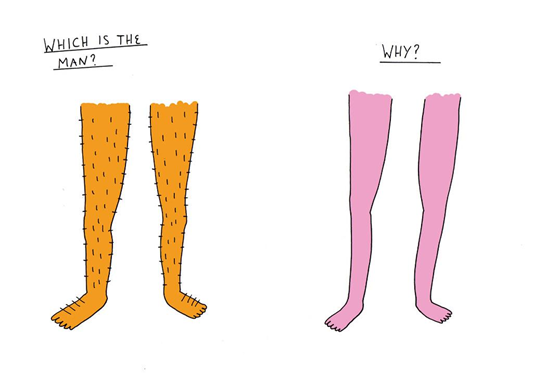
context specific, not universal
“what is the appropriate behavior for this situation?”
doing gender
the mechanism
gender accountability
self “ongoing expectations associated with sex category, not simply the event of other people holding the actor responsible for their behavior.” (Hollander, 2018)
the link between interaction and social structure
process:
perception of a set of expectations as relevant to the current situation (orientation to sex category)
anticipation of how others might respond to various courses of behavior (compared to expectations). (assessment)
adapting behavior to meet those expectations (or avoid possible negative consequences) (enforcement)
Hollander (2018) argues that most of the time, people discipline themselves through the anticipation of potential consequences
doing gender
is it possible to not do gender?
“doing gender is unavoidable”
Situations of doing gender:
- Bathrooms, matting, work…
“it does not seem plausible to say that we have the option of being seen by others as female or male.” (West & Zimmerman, 1987)
status characteristics theory
status characteristics theory
Theory of “expectations”
How does social interaction help to produce gender distinctions and inequalities?
for interaction to occur, it is necessary to have some basis for categorizing others vis-a-vis oneself (Ridgeway 1997)
“Gender is something we do in order to make social life more manageable” (Risman, 1998 on Warthon, 2005)
people rely on some attributes to organize social interactions (i.e.: sex categorization) >> expectations & stereotypes
why?
- less cognitive effort organizing interactions
status characteristics theory
Status characteristic is “an attribute on which individuals vary that is associated with widely held beliefs according greater esteem and worthiness to some states of the attribute than others” (Ridgeway 1993: 179)
this approach intends to explain goal-oriented interaction >> important expectations are those related to performance.
intends to explain group behavior
also, intends to understand how distinctions and inequalities are held
“People form their expectations about others’ competence by weighing each status characteristic in terms of its relevance to the task at hand.”
more of them: age, race, work-position, etc.
status characteristics theory
mechanism
characteristic >> expectations >> evaluation (relevance)
“people seek cues as to how others will perform in a particular situation and use status characteristics to assess this.”
gender is contextual, and can be “activated” depending on the situation/expectations
actors are members of different sex categories (group composition) >> difference
gender is relevant to the task (i.e.: sports) relevance
many examples: schools, workplace, sports, etc.
status characteristics theory
different from socialization
interaction styles are related to the setting of the situation
- men and women behave different because they usually face different situations
theoretical developments in lab experiments (instead of qualitative ethnographical studies)
homophily
do opposites attract?
Similarity tends to be a much stronger source of interpersonal attraction than difference.
“Social ties tend to be between people who are similar on salient sociodemographic dimensions” (Popielarz 1999).
Homophily >> describe people’s preference for sameness, a preference that is expressed in their interpersonal relations.
experienced and reinforced in everyday life >> Groups to which people belong: neighborhoods, clubs, associations, church, etc.
people are drawn to those whose attitudes, values, and beliefs that are similar to their own
ascribed characteristics: gender, age, race. >> “proxies” for similarity and dissimilarity since they are believed to be reliably associated with particular characteristics
homophily
the similarity-attraction hypothesis: people should prefer to interact with others like themselves (same sex groups). They feel uncomfortable, threatened, and less committed when they are in more heterogeneous groups
this approach helps to understand some aspects of gender (workplace)
important in understanding work experiences and organization
proportions, commitment, attachment
visibility, contrast, assimilation of minority (or subordinated) groups
empowering thresholds in groups
focus on social interactions mediated by gender
what is the sex of an airplane?